
Why Do Dogs Shake? The Science of Tremors, Shivers, and Twitches
Canine shaking is not a single behavior but a spectrum of physiological responses ranging from joyful emotion to life-threatening neurological dysfunction. We call them "shakes," but what we are actually observing can be anything from a deliberate muscle-warming mechanism to an urgent distress signal that your dog cannot articulate any other way.
Understanding the root cause requires moving past the visual and into the biological. A dog who trembles after a bath is engaging an ancient, energy-efficient drying mechanism. A dog who trembles at 3 AM during a thunderstorm may be experiencing a pain-amplified noise phobia. The mechanism looks the same. The cause—and the treatment—could not be more different.
According to data from the American Kennel Club, shaking and trembling are among the top ten reasons owners bring dogs in for emergency veterinary consultations. The gap between benign and serious is measured not in minutes but in awareness.
What Is the Difference Between Shivering and Trembling?
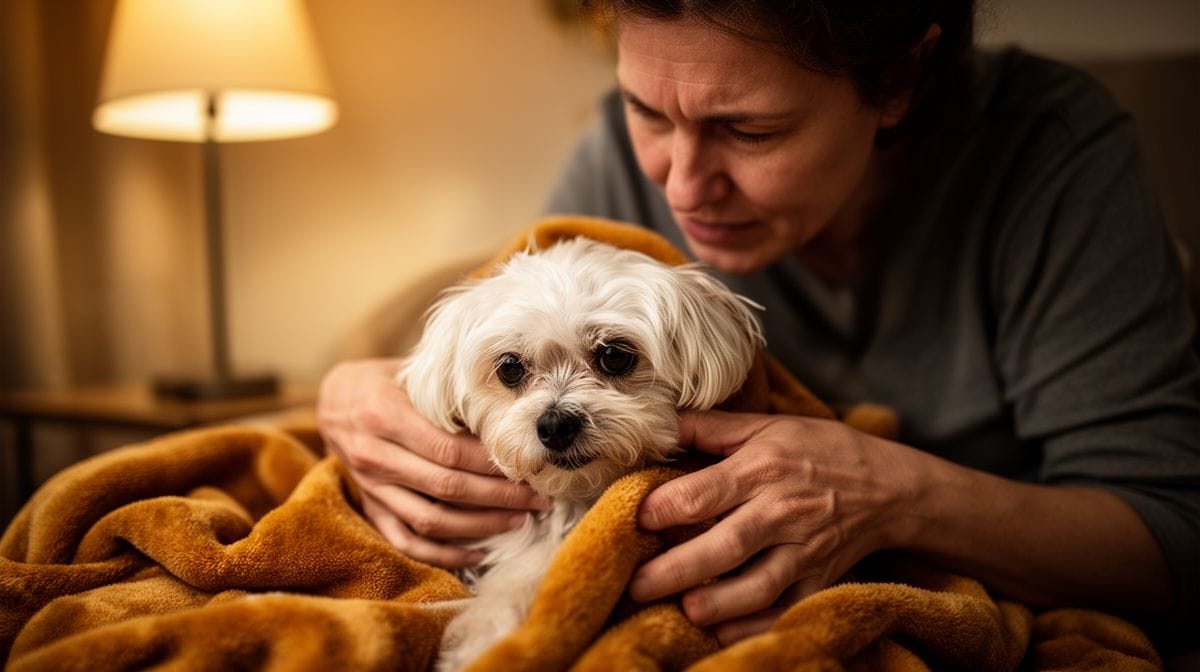
Shivering is thermoregulatory; trembling is structural. Shivering produces heat through rapid, controlled muscle contractions. Trembling is an involuntary, repetitive muscle movement that occurs independent of temperature need.
This distinction is the cornerstone of a dog owner's diagnostic toolkit. Shivering is purposeful; trembling is a symptom.
Shivering typically occurs after a bath, on a cold day, or when a small-breed dog transitions from a warm lap to a cold floor. The body is performing a mechanical function—converting chemical energy (glucose) into heat. This type of shaking is rhythmic, self-limiting, and stops once the dog has warmed up.
Trembling—also called tremors—is different. A dog experiencing pathological tremors will shake in a warm room, after adequate food and rest, without a psychological trigger. The muscles are misfiring, not performing. According to the Merck Veterinary Manual, tremors occur when there is an instability in the feedback mechanism that coordinates motor function.
flowchart TD
    A["🐕 Dog Is Shaking"] --> B{After bath, cold weather, or excitement?}
    B -- Yes --> C["✅ Likely Normal Shiver
Warm, comfort & monitor"]
    B -- No --> D{Shaking in warm room with no trigger?}
    D -- Yes --> E["⚠️ Possible Tremor
Observe for 30 minutes"]
    D -- No --> C
    E --> F{Other symptoms?}
    F -- Yes --> G["🚨 Emergency Vet Visit
Toxin or neurological issue"]
    F -- No --> H["📋 Log & monitor
Vet visit if persists 24+ hrs"]

    style A fill:#e8f4fd,stroke:#1a56db,font-weight:bold
    style C fill:#d4edda,stroke:#28a745
    style E fill:#fff3cd,stroke:#ffc107
    style G fill:#f8d7da,stroke:#dc3545,font-weight:bold
    style H fill:#d1ecf1,stroke:#17a2b8
"Happy Shakes": The Emotional Tremor
Happy shakes are a full-body emotional release triggered by anticipation of pleasure or overflow of positive arousal. This is arguably the most misunderstood type of canine trembling.
You see it during your pre-walk routine. The leash comes out. The harness is snapped. You move toward the door. And your dog begins to shake uncontrollably, their whole back end vibrating with something that can only be described as barely-contained joy. This is not a malfunction. This is a feature.
The physiological driver is adrenaline. Excitement triggers a surge of epinephrine into the bloodstream. For dogs with highly reactive autonomic systems—often the more energetic and bonded breeds—this adrenaline surge is so intense it manifests as a visible motor tremor. Reddit's r/dogs community has documented this phenomenon extensively, with owners sharing videos of dogs who shake at the sight of their favorite treats, specific locations, or the people they love.
The critical diagnostic marker of happy shakes is context and duration. They start with the exciting trigger. They stop completely once the event arrives. The dog who shakes before the walk does not shake during the walk.
"My Vizsla starts shaking the moment I put on my running shoes. By the time we get outside, she has stopped completely. It is pure anticipation—the dog equivalent of butterflies." — Dog owner, r/vizsla
Medical Causes of Dog Shaking That Require Vet Attention
Medical shaking occurs due to systemic physiological disruptions including hypoglycemia, toxin ingestion, Addison's disease, and primary tremor syndromes. When the environment is warm, the dog is fed, and there is no emotional trigger, shaking becomes a window into internal dysfunction.
| Cause | Associated Signs | Urgency Level |
|---|---|---|
| Hypoglycemia (low blood sugar) | Weakness, disorientation, collapse | 🚨 Emergency |
| Toxin ingestion | Vomiting, muscle rigidity, rapid breathing | 🚨 Emergency |
| Shaker Syndrome | Whole-body tremors, often white small breeds | 🩺 Vet within 48 hrs |
| Hypothyroidism | Weight gain, lethargy, cold intolerance | 📋 Scheduled appointment |
| Addison's Disease | Muscle weakness, vomiting, dehydration | 🚨 Emergency if in crisis |
| Canine Distemper | Jaw spasms, limb twitching, fever | 🚨 Emergency |
| Chronic Pain (arthritis) | Guarding posture, reluctance to move | 🩺 Vet within 48 hrs |
Hypoglycemia is particularly critical to recognize in toy breeds and puppies. A small-breed puppy who begins shaking after skipping a meal should be offered a small amount of honey or Karo syrup on their gums before transport to emergency care—this can prevent a hypoglycemic seizure escalating.
Shaker Syndrome (Generalized Tremor Syndrome or "White Shaker Dog Disease") disproportionately affects white-coated small breeds—Maltese, West Highland White Terriers, Bichon Frisés—but can occur in any breed. It is an immune-mediated condition highly treatable with corticosteroids like prednisone.

When Is Dog Shaking a Medical Emergency?
Dog shaking requires immediate emergency veterinary care when accompanied by collapse, rigid muscles, loss of consciousness, rapid breathing, or known toxin exposure. Time is tissue in a neurological crisis.
The most dangerous scenario is toxin-induced tremors. Common toxins—xylitol (in sugar-free products), rat poison, dark chocolate, mushrooms, and certain insecticides—can trigger seizure-grade tremors within minutes of ingestion. If you witnessed potential ingestion, do not wait to see if it "passes." Call the ASPCA Animal Poison Control Center at (888) 426-4435 immediately.
Five Signs That Demand an Emergency Vet Visit:
- Shaking accompanied by vomiting more than twice
- Shaking after access to medications, plants, or chemicals
- Tremors that spread from one body area to the entire body
- Shaking combined with spatial disorientation (walking in circles, bumping walls)
- Shaking that causes the dog to fall over (loss of balance/ataxia)
How Breed and Age Affect Shaking
Senior dogs and small breeds have a significantly higher baseline risk for pathological tremors due to metabolic differences and age-related neurological changes.
Small breeds have a higher metabolic rate than large breeds—they burn through glucose faster relative to their body weight. This is why a 5-pound Chihuahua can develop shaking from skipping breakfast when a 70-pound Labrador would barely notice. It is not weakness; it is physiology.
As dogs age, they lose muscle mass (sarcopenia) and their thermoregulatory efficiency drops. A senior dog who used to sleep comfortably in a 65°F room may now shiver in those same conditions. Age-related changes can also unmask conditions like cognitive dysfunction or spinal pain that manifest as tremors. If your senior dog has recently developed new tremors, a complete bloodwork panel and spinal assessment are warranted.
FAQ: Frequently Asked Questions About Dog Shaking
My dog shakes in their sleep. Is that normal?
Yes. REM sleep tremors are entirely normal and indicate your dog has entered deep, restorative sleep. They are dreaming. Limbs may twitch, the nose may quiver, and there may be sounds. Do not startle the dog awake—they can bite reflexively when startled from REM sleep, even the gentlest dogs.
Should I be concerned if my dog shakes every day?
Context is everything. Daily "happy shakes" triggered by routine excitement (mealtimes, walks, greetings) are generally benign. Daily tremors in a resting state with no obvious trigger warrant a veterinary examination to rule out systemic or neurological causes.
Can anxiety cause my dog to shake?
Absolutely. Anxiety-induced trembling is physiologically identical to cold-induced shivering. The trigger is psychological—but cortisol and adrenaline activate the sympathetic nervous system in the same way cold does. A dog with severe anxiety may exhibit persistent trembling as a chronic baseline state.
What is "Shaker Syndrome" in dogs?
Shaker Syndrome (Idiopathic Sterile Inflammatory Meningoencephalitis) is an immune-mediated inflammation of the nervous system causing full-body intention tremors in small-breed dogs. It responds well to prednisone with an excellent long-term prognosis in most cases. It is often undiagnosed because owners assume the shaking is "just a small dog thing."