What are the core dog separation anxiety symptoms?
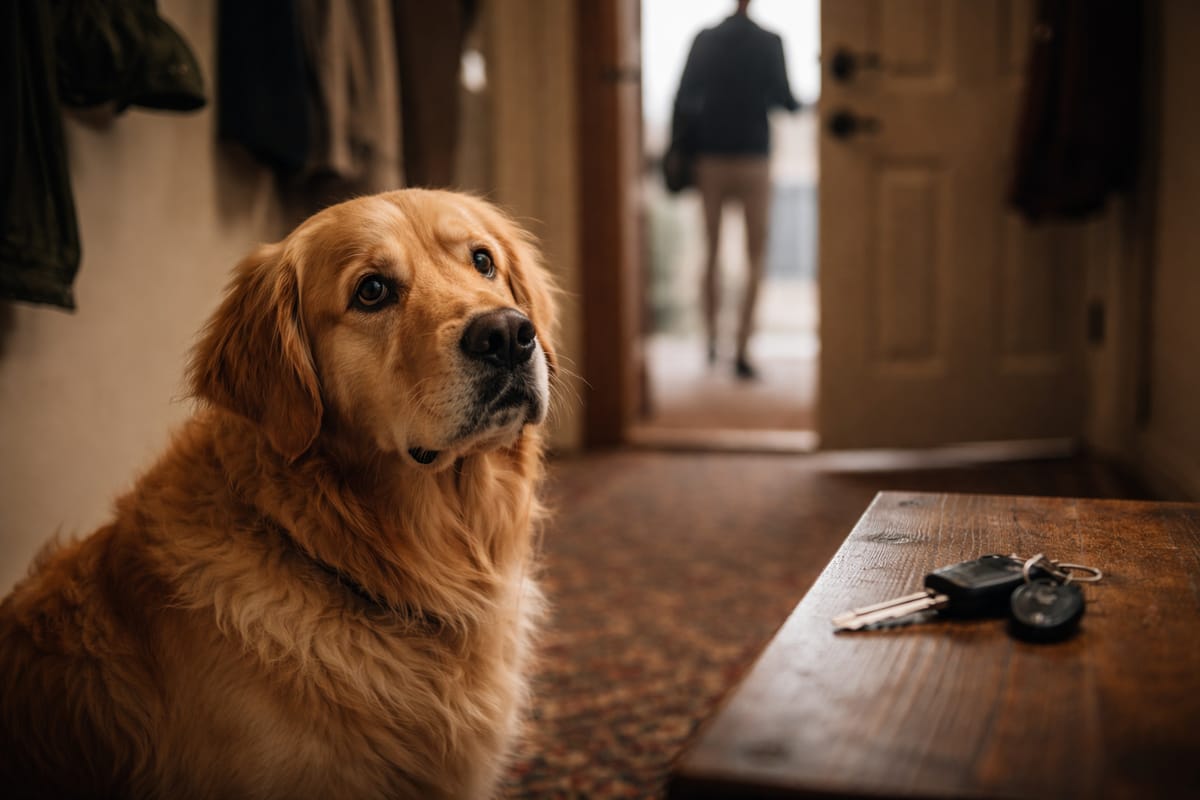
Dog separation anxiety symptoms typically manifest within the first 30 minutes of owner departure and are driven by a genuine physiological panic response. We have all walked through the front door to find a torn sofa or a neighbor’s complaint about howling. It feels personal. It feels like spite. However, research from PetMD confirms this is a window of pure neurological distress. Your dog isn't mad at you for leaving; they are experiencing a panic attack.
Exit point destruction is the most recognizable marker of this disorder. You might notice deep scratches on door frames or shredded blinds where the dog attempted to follow you. This is distinct from boredom, where a dog might shred a random shoe because it smells like you. Panicked dogs focus on the barrier that keeps them from their "safe" person. Their vocalization follows a specific high-intensity pattern. It is rhythmic. It is persistent. It is heartbreaking.
As the following diagram illustrates, canine distress is built upon four distinct pillars of behavior:
flowchart TD
    ROOT["Canine Separation Anxiety: 4 Pillars of Distress"]

    ROOT --> PHY["🔴 Physiological Signs"]
    ROOT --> VOC["📢 Vocalization"]
    ROOT --> DES["💥 Destruction"]
    ROOT --> ELI["⚠️ Elimination"]

    PHY --> P2[Pacing / Restlessness]
    PHY --> P3[Hypersalivation]
    PHY --> P4[Drooling / Wet paw prints]

    VOC --> V2[Howling & Barking]

    DES --> D2[Scratching doors & windows]

    ELI --> E2[House soiling during absence]

    style ROOT fill:#e8f0fe,stroke:#1a56db,stroke-width:2px,font-weight:bold
    style PHY fill:#cce6ff,stroke:#0066cc,font-weight:bold
    style VOC fill:#ffcccc,stroke:#cc0000,font-weight:bold
    style DES fill:#ffcccc,stroke:#cc0000,font-weight:bold
    style ELI fill:#fff0e6,stroke:#ff6600,font-weight:bold
Identifying the four pillars of canine distress.
The Cortisol Connection: Why Your Dog Isn’t Just "Naughty"
Separation anxiety in dogs is fueled by elevated salivary cortisol levels, confirming that affected pets undergo systemic physiological stress. When your dog realizes you are leaving, their hypothalamus sends a chemical SOS. The adrenal glands respond by flooding the system with cortisol. According to the PMC Cortisol Study, these levels remain dangerously high throughout the separation period.
Punishing a dog for this behavior is a fundamental tactical error. If you scold a dog for a mess made three hours ago, you aren't teaching them a lesson. You are just adding another layer of fear to a brain already swimming in stress hormones. This chronic elevation doesn't just impact their mood. It weakens their immune system. It makes them more reactive to noises. It turns their world into a place of constant threat. We must view the "naughty" act as a biological byproduct of an overloaded nervous system.
The DS/CC Protocol: Systematic Desensitization Step-by-Step
The Desensitization and Counter-conditioning (DS/CC) protocol is the clinical gold standard, focusing on building a dog's tolerance for solitude at a "sub-threshold" level. Change happens slowly. It requires patience that most of us find difficult to muster on a busy Tuesday. But the science is clear: we must teach the brain that your departure is a non-event.
Phase 1: Identifying the Threshold
You must use a remote camera to pinpoint exactly when your dog moves from "calm" to "concerned." For some dogs, the panic starts when you put on your shoes. For others, it’s exactly 45 seconds after the door clicks shut. This is your "threshold." If your dog panics at 10 seconds, your training sessions must stop at 8 seconds. We never want them to reach the point of no return.
Phase 2: Desensitizing Departure Cues
Identify the "triggers" that signal your exit, such as the jingle of car keys or the sound of the garage door. You need to perform these actions without actually leaving. Pick up the keys. Sit on the couch. Turn on the TV. Put on your heavy winter coat. Make a sandwich. By repeating these cues without the consequence of abandonment, you break the association between the key jingle and the neurological spike.
As the video below demonstrates, the process is a game of inches rather than miles:

When should you consider medication for dog separation anxiety?
Medication is indicated for moderate to severe cases of separation anxiety in dogs to lower the panic threshold, making behavioral training possible. Many owners feel a sense of failure when they consider pharmaceuticals. Don't. If your dog’s brain is constantly in a state of high-alert, they are biologically incapable of learning new behaviors. Medication isn't a "sedative" to make them sleepy; it’s a chemical bridge to bring them back to a state of logic.
| Medication Type | Common Examples | Primary Use Case |
|---|---|---|
| Daily SSRI | Fluoxetine (Reconcile) | Long-term baseline anxiety reduction; takes 4-6 weeks to peak. |
| Daily TCA | Clomipramine (Clomicalm) | FDA-approved for SA; helps stabilize mood and reactive patterns. |
| Situational SARI | Trazodone | Fast-acting; used as a "booster" for specific high-stress events. |
| Benzodiazepine | Alprazolam | Used for acute panic episodes; requires careful veterinary supervision. |
According to the Merck Vet Manual, these interventions are most effective when paired with the DS/CC training mentioned above. Think of it as a physical cast for a broken leg. The medication holds the structure in place so the behavioral healing can happen.
Preventing Separation Anxiety in Puppies (The 3-16 Week Window)
Early prevention focuses on high-quality sleep and graduate habituation during the critical socialization window of 3 to 16 weeks. This is the formative era. Everything your puppy experiences now will dictate their personality for the next decade. Resilience is built in the quiet moments between play sessions.
The "9-Hour Rule" for Puppy Sleep
A 2024 study by the Royal Veterinary College (RVC) reveals that puppies who get at least 9 hours of undisturbed nightly sleep are significantly less likely to develop anxiety disorders. Sleep is when a puppy's brain processes the day's events. If their sleep is constantly interrupted by your movements, they never fully reset their stress levels. Use a crate in a quiet room to ensure they get the deep REM cycles they need to remain emotionally level.
Avoid the "Return Fuss"
Research from 2025 indicates that making a "grand entry" when you return home can increase a dog's anxiety risk by six times. It’s tempting to start a high-pitched party the moment you walk through the door. Stop. If you make your return the most exciting part of their day, you are inadvertently making your absence the most depressing part. Walk in quietly. Put your bag down. Wait for the puppy to be calm before offering affection.
The Anime Hack: Viral Solutions and Success Stories
Modern pet parenting often combines clinical science with creative enrichment, such as visual stimulation and social support. We are seeing a rise in "atypical" solutions that supplement traditional training. Some owners are finding that background noise isn't enough; their dogs need specific visual engagement.
The most famous recent example involved a dog who struggled with silence. The owner discovered that leaving the anime JoJo’s Bizarre Adventure running on the TV kept the dog focused and calm. While it sounds humorous, there is logic here. The high-contrast colors and constant movement of certain animation styles can provide more meaningful "passive engagement" than a static radio station.
The following success story highlights how even the most "unadoptable" dogs can find peace:
People Also Ask (FAQ)
Does getting a second dog help with separation anxiety?
No. Most research indicates that a second dog rarely solves the problem because the anxiety is specifically tied to the human-canine bond. Your dog isn't lonely for a "friend"; they are distressed by the absence of their specific attachment figure.
Can CBD oil cure separation anxiety?
While CBD may offer mild calming effects, 2025 data suggests it is not a primary treatment compared to DS/CC and FDA-approved meds. It should be viewed as a supplement, not a solution. Always consult your vet before adding supplements to a clinical training plan.
Is it okay to leave a dog with separation anxiety in a crate?
Only if the dog is already comfortably crate-trained. A panic-stricken dog who is not used to a crate will often injure themselves—breaking teeth or nails—trying to escape the confinement. If your dog isn't "pro-crate," use a dog-proofed room with a baby gate instead.