

Important: Before beginning any new physical regimen, consult your veterinarian and your primary care physician to ensure both you and your dog are healthy enough for increased activity.
The Dual-Benefit Case for Exercising with Your Dog
The 30-Day Fitness Challenge with your dog impacts the health ecosystem by providing a symbiotic strategy where canines serve as non-judgmental accountability partners. We’ve all felt the sting of a missed gym session. Typically, when we rely on human partners, a single "I'm tired" text derails the week. Your dog doesn't text. They stand by the door with a wagging tail and a stare that makes "skipping" feel like a betrayal.
This emotional pull translates into cold, hard medical data. According to the Mayo Clinic, dog owners are significantly more likely to reach the recommended 150 minutes of moderate exercise per week. The results? Lowered blood pressure, reduced risk of Type 2 diabetes, and stronger bone density due to the weight-bearing nature of walking.
For the dog, the gains are equally profound. Inactive dogs are 6.5 times more likely to develop cognitive issues as they age. By committing to this challenge, you are essentially "brain-training" your pet through environmental scent-work and physical exertion.
"Even on the coldest mornings when I want to hide under the covers, the dog is there. He's my resiliency builder. We go out, we breathe the cold air, and we win the day before 7:00 AM." — User Reflection
flowchart TD
    A[Morning Wakeup] --> B[Dog Motivation]
    B --> C[30m Activity]
    C --> D[Endorphin Release Owner]
    D --> E[Calmness Pet]
    E --> F[Habit Reinforcement]
    F -->|80-90% Higher Completion| A

    classDef process fill:#e1f5fe,stroke:#01579b,stroke-width:2px
    classDef loop fill:#f3e5f5,stroke:#4a148c,stroke-width:2px

    class A,B,C,D,E process
    class F loop
The positive feedback loop of shared exercise leads to 80-90% higher completion rates.
Why is the Pet Obesity Crisis an Urgent Call to Action?
Direct intervention through the 30-Day Fitness Challenge addresses the reality that 52.9% of dogs in the U.S. are currently classified as overweight or obese. This isn't just a cosmetic issue. It is a metabolic catastrophe. Carrying extra weight isn't "cute"—it’s a silent thief that shortens your best friend's life by 1.5 to 2 years (APOP, 2025).
Inflammation is the hidden enemy here. Adipose tissue (fat) is not inert; it secretes pro-inflammatory cytokines that accelerate arthritis and damage internal organs. When you see a "chonky" dog struggling to get off the rug, you aren't seeing a happy, well-fed pet; you are seeing a body in a state of chronic stress.
Social norms are shifting. On platforms like Reddit, the community is moving away from gloriying "fat pets."
Obesity increases diabetes risk by nearly 300%. By choosing this 30-day sprint, you are essentially buying back those two lost years. You are trading overfeeding for over-achieving.
Veterinary Safety Guidelines: The "5-Minute Rule" and Breed Limits
Before starting the 30-Day Fitness Challenge with your dog, owners must apply age-appropriate rules to prevent permanent orthopedic damage. Pushing too hard, too fast is the fastest way to end up in an emergency vet clinic.
Puppy and Senior Considerations
Puppies are not just "small dogs." Their skeletal systems are unfinished. Growth plates—the soft areas at the ends of long bones—don't typically close until a dog is 12 to 18 months old. If you force a young puppy to go on a 3-mile "fitness run," you risk permanent joint deformity.
- The 5-Minute Rule: Limit structured exercise to 5 minutes for every month of age. A 4-month-old puppy should only engage in 20 minutes of formal walking twice daily.
- Senior Modifications: For older dogs, focus on proprioception and "Sniffari" walks. The goal is muscle maintenance, not high-impact speed.
Breed-Specific Constraints
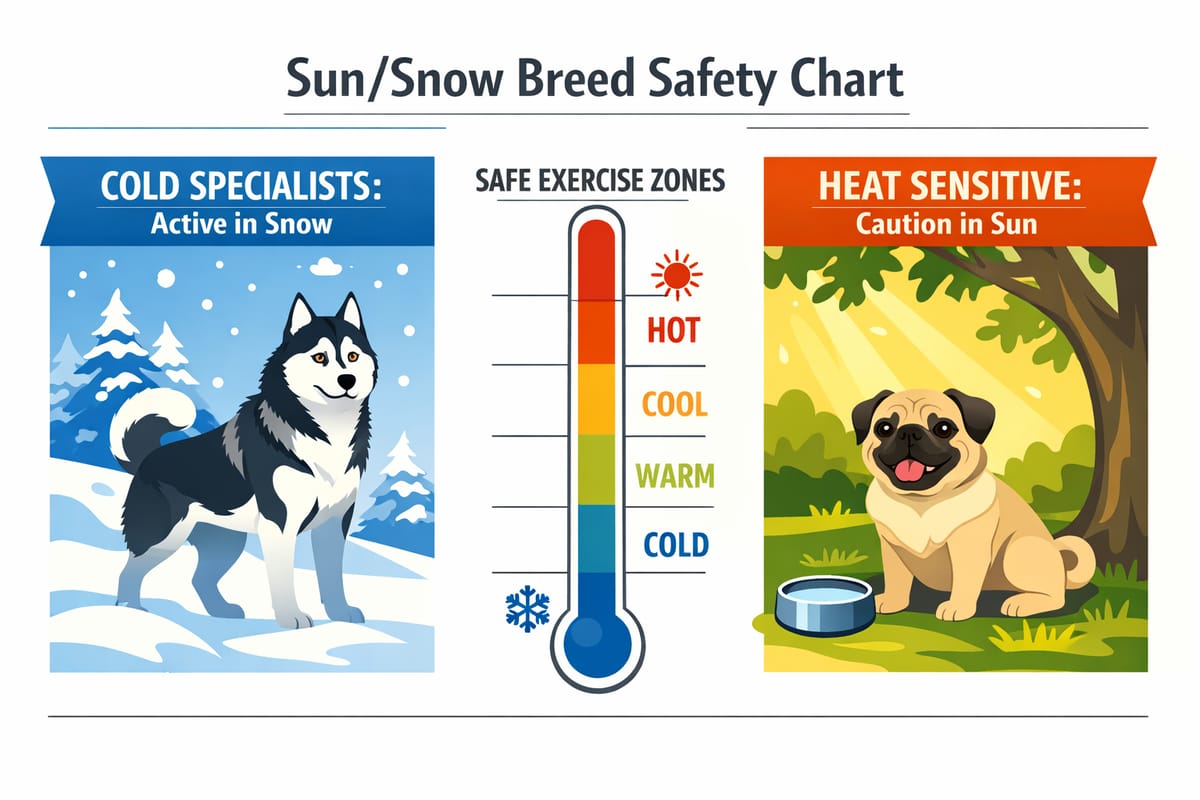
Your dog's DNA dictates their thermal and athletic ceiling.
- Brachycephalic Breeds (Pugs, Bulldogs): These dogs have a structural disadvantage in cooling themselves. They cannot "sweat" like you; they rely on panting. Intense exercise in temperatures over 70°F (21°C) can be fatal.
- Working Breeds (Border Collies, Huskies): These are the elite athletes. A simple walk isn't enough; they need "jobs" or hill sprints to burn through their high metabolic energy.
As noted by Small Door Vet, checking for growth plate closure is a non-negotiable step for large breeds like Great Danes or Labs before they start high-impact running.
How to Structure Your 30-Day Fitness Challenge Routine?
Effective momentum in the 30-Day Fitness Challenge requires progressive weekly builds to prevent owner burnout and pet injury. We don't start with a marathon. We start with the driveway.
| Phase | Weekly Theme | Human Goal | Dog Goal |
|---|---|---|---|
| Week 1 | Foundation | 20m Daily Walk + 20 Squats | Consistent Leash Manners |
| Week 2 | Intensity | 30m Run/Walk Intervals | 10m Scent Work |
| Week 3 | Variety | 40m Hike or Stairs | Fetch/Tug Cardio Bursts |
| Week 4 | Peak | 60m Adventure + Core | Advanced Agility/Recall |
Week 1: Foundation (Building the Streak)
This week is about the "Trigger." Your only goal is to put on your shoes at the same time every morning. Your dog will quickly learn this cue. The mission: 20 minutes of steady walking. No phone, no podcasts. Just you and the leash. Focus on "Loose Leash Walking." If the dog pulls, stop. This mental discipline is as exhausting as the walk itself.
Week 2: Increasing Intensity (Interval Training)
We introduce the "Sniff-and-Go" method. Walk for 2 minutes, then jog for 30 seconds. This varying heart rate is excellent for cardiovascular conditioning. For the dog, interval training mimics natural hunting patterns—short bursts of energy followed by steady tracking.
Week 3: Adding Variety (Indoor Obstacles)
Weather is no longer an excuse. If it's raining, we move the challenge inside. Use the "Stair Sprint" technique. Toss a toy up the stairs, have your dog retrieve it, and you meet them at the top for a set of lunges.
Week 4: Peak Performance (Trail Adventures)
By now, your dog's "Body Condition Score" should show visible improvement. You might notice a tighter tuck in their waist. This is the time for a 60-minute trail hike. New smells, uneven terrain, and elevation changes will solidify the habit.

Fun Activity Ideas: From Hide-and-Seek to Stair Sprints
Incorporating mental stimulation into the 30-Day Fitness Challenge prevents destructive behaviors more effectively than physical exertion alone. A tired dog is a "good" dog, but a mentally satisfied dog is a peaceful companion.
The "Find It" Game: Hide five pieces of high-value treat around your living room. Command your dog to "Find it." This activates their olfactory bulb and actually lowers their heart rate through focused concentration. Studies show that 15 minutes of intensive sniffing can be as tiring as an hour-long walk.
Tug-of-Squat: Hold a tug toy while performing squats. Every time you descend, give the toy a gentle shake to engage your dog's core and neck muscles. You get the quad burn; they get the "kill drive" satisfaction.
The Hands-Free Advantage: If you plan on running, you must ditch the handheld leash. Using a belt-mounted leash allows you to maintain proper running form and prevents "leash jerk" spinal injuries for both you and the dog.
"Switching to a hands-free leash changed everything. I can actually pump my arms, and my dog feels like he's part of the pack, not just a weight I'm dragging." — Fitness Enthusiast
Overcoming Barriers: Weather, Aging, and Lack of Time
Sustaining the 30-Day Fitness Challenge during winter or with a senior pet requires "Habit Stacking" and therapeutic modifications. Life will get in the way. The key is the "Don't Miss Twice" rule. If you miss Monday, Tuesday is mandatory.
The Weather Barrier:
In the heat of summer, transition to "Water Work." Find a dog-friendly beach or use a kiddie pool for resistance walking. In the winter, use protective paw wax (like Musher's Secret) to prevent salt irritation, and keep sessions shorter but more frequent.
The Aging Barrier:
Senior dogs may have some arthritis. Don't stop moving—motion is lotion. Switch to hydrotherapy (swimming) or light balance work on "wobble boards" to improve core strength without impacting the joints.
The Time Barrier:
Stack your habits. Instead of scrolling on your phone while your dog "goes" in the backyard, perform a 7-minute HIIT circuit. Your dog will likely try to join in—let them. This "play-exercise" dynamic is how you bridge the gap between a chore and a joy.
People Also Ask (FAQ)
Is it safe to run with a puppy?
No. You should generally wait until 12 to 18 months of age before taking a puppy for high-impact running on pavement. This allows the growth plates to close fully, preventing life-long orthopedic issues like hip dysplasia or early-onset arthritis. Stick to the 5-minute rule for walking until then.
How much exercise does my dog need daily?
Requirements vary by breed and age. Most adult dogs need between 30 minutes and 2 hours of daily activity. High-energy breeds like Border Collies or Labs will be at the higher end of that spectrum, while lower-energy breeds like Basset Hounds may be satisfied with 30-45 minutes.
Can cats participate in a 30-day challenge?
Absolutely. While they won't go for a 3-mile run, cats benefit from 10-15 minute "play sprints" using wand toys or laser chasers. Focus on mimicking the "hunt-catch-eat" cycle to keep them mentally and physically sharp.
Your Monday Morning Action: Go to your calendar right now. Block out 20 minutes for tomorrow morning. Place your walking shoes by the dog's leash tonight. The challenge doesn't start with a sprint; it starts with the decision to not miss twice.